
THE SONIC SHARE
TAPPING INTO A COMMUNITY OF LISTENERS, SPACE WE HEAR CULTIVATES AESTHETIC CONNECTIONS THROUGH ATMOSPHERIC INSPIRATION

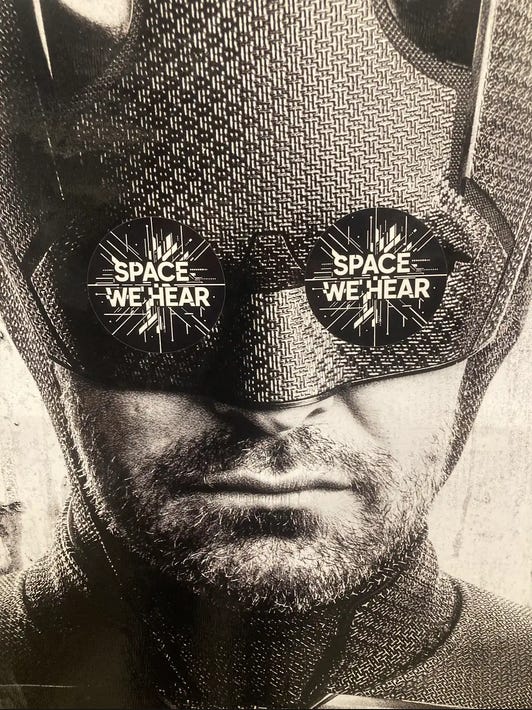
The community of those animated creatively by a certain genre of aesthetics, is the focus of the new podcast series “Space We Hear” launching this spring by Paul W. Weston of INSTIGATOR. It brings together two tropes of old radio–the music and the talking about it. In very few contexts do two such disparate qualities of listening inhabit the same sphere. Weston is an artist and a designer, and has at various times in his life also been a DJ, and like many creatives best known as prodigious in a visual medium, he has a shadow passion, which is music. His DJ career, which started in his college days, was dominated by an interest in pure sound–not danceable tunes–but atmospheric experiences, aimed at creating an evocative backdrop for listeners who may have been otherwise distracted. He was painting with sound.
Weston claims many influences from his youth that have a continued relevance to who he is today. They include television personalities, artists, and musicians. In some way, each of these aspects of a personalized cultural identity can be viewed as ‘heroes’. The sharing of these references, between friends old and new, is both an appreciation of the makers of music as well as the sounds themselves. Musicians raise us up out of the ordinary, and if anything is considered heroic, that is a prototypical definition. The affinities we develop later in life emerge from those first dalliances into the culture of cool to which musicians belong.

Music is an important aspect of many people’s lives. When we are young, and growing up into adulthood, music is something that appeals to us deeply. Whether raised on radio or MTV or audio streaming, whether we shared and bought records, tapes, CDs, or downloaded and subscribed to music services, music is a constant force that rarely evades us. Even when not actively pursuing the sorts of experiences music offers, it seems to find each of us, playing in cafes, or bookshops, or on city streets. So many moments have been defined for us by the inclusion of music. Within this culture, the DJ holds a special role. They are the generators of experience. They cultivate a taste for aesthetic wonderment. What Weston is looking to achieve in Space We Hear is yet something beyond that. He is curating the experience of sharing musical tastes. The concept is at once accessible and yet also niche in that most of his guests are not in themselves musicians, or do not publicly signify as such. They are visual artists whose chosen medium provides an alternately elevated interval through which to read the dimensions of our shared existence.
The interchange between one musical sensibility and another is mitigated in the specific interval of these conversations by a serialized limitation: The Top Ten. Lists like these are ubiquitous in music journalism. Top 10, Top 20, Top 100. Our favorites are ours alone despite having some commonality with a multitude of others. The question remains, why these? Out of all the hundreds, the thousands of albums or songs in our lives. If we’re to be judged by our tastes, then let us be judged according to what moves us. Thinking of only ten presents a challenge. Rather than choosing by the music itself, one should choose ten moments in one’s life when the experience of music embodied a search for meaning or a redolent memory forever frozen in memory. We all have songs that became our personal anthems, or songs which allowed us to reach certain zones of introspection, or songs which reminded us of lost (or yet to be found) love.
The creative personality especially finds solace and inspiration with the accompaniment of music. This circumstance was the origin of the concept for Space We Hear. An artist requires a space in which to create, and it’s in that space that one encourages the intimacy of private inspiration, for which music is the inspirational surrogate leading to new ideas. The cultivation of musical taste originates in youth, when what lays ahead of us is a life to be filled with experience. Music conveys a heightened awareness of degrees of sensory encounter while slowly achieving a necessary presence in our lives. We become our tastes, and they embody us in each successive interval of emotional growth. As we grow older our tastes alter with us, as we alter in history. Ten moments of inspiration are the means by which Space We Hear achieves its end result–to share the sounds that shape our lives. Ten moments against a lifetime of lived experience. Space We Hear mines the rough darkness of identity. These will prove to be conversations worth remembering.